Say that againJed’s portfolio

A puppet
learns Alexa

Explore a recovered 2018 course, some very awkward conversations, and a chance to make your own talking story.

Watch the course

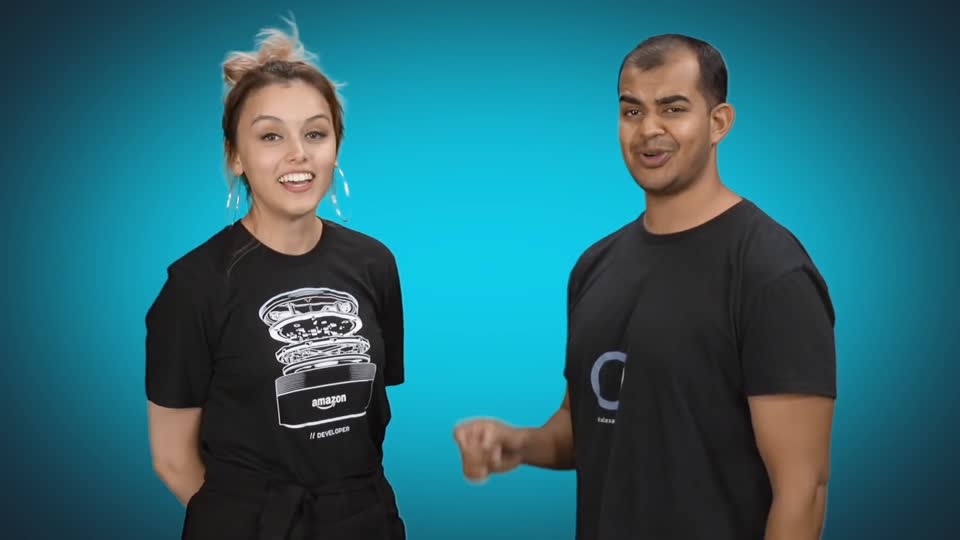
With Cami, Akersh & Sylvester.
Jed is underneath the puppet.

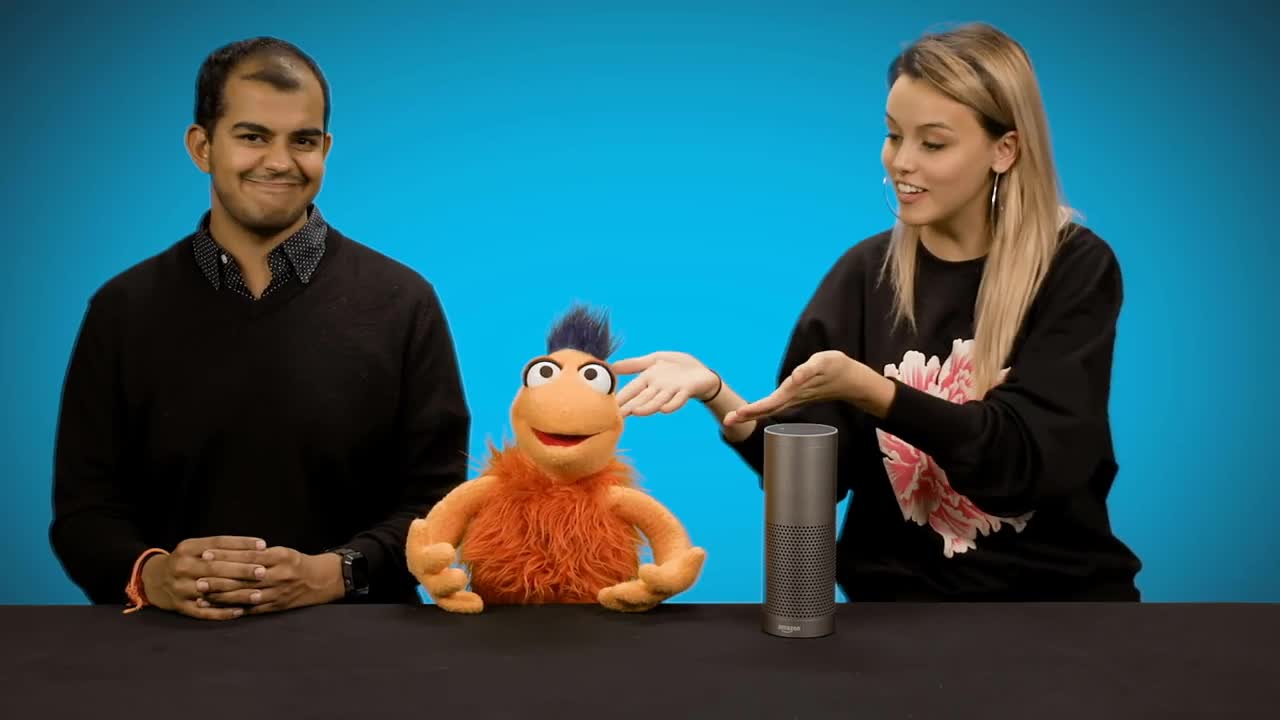
Akersh and Cami at a desk with Sylvester, a small orange puppet, and an Echo speaker
AWS Educate Hour of Code, 2018

The original lesson

In 2018, Cami, Akersh and Sylvester helped children build an Alexa skill for AWS Educate’s Hour of Code. I wrote and led the project, built the course in Articulate Rise, and performed Sylvester. Cami and Akersh starred and consulted on the content.

All four videos and the sample audio survived. The videos show the tools as they were in 2018; some screens and services have since changed.

Choose a lesson to begin.

Teaching computers to talk

Cami and Akersh introduce Sylvester to Alexa, cloud computing and the idea of teaching a computer to respond.

Something to think about

When you ask a person for something, they use context to work out what you mean. What would a computer need to know to do the same job?

Build a storytelling skill

Follow the original walkthrough of a Fairy Tale blueprint. A story has places for new words, plus pauses, sounds and expressions that change how it is told.

What the original task asked

Choose a Storyteller blueprint, add at least three blanks, three pauses, and three sounds or expressions, then give your skill a name. Creating the skill needed an Amazon account and adult help. You can try the idea in the account-free activity below.

Hear the story

Here’s the original story recording. Listen for the details the storyteller asks for, and how those details come back in the tale.

Read the story recording

Cool! Well, now that we've built our skill, let's go ahead and try it out.

Okay! I think you guys should try it out because I did the building and I want you guys to have fun!

Oh, wow! Thanks, Sylvester!

Yeah, that's really nice of you.

Alexa, open my funny tale.

Welcome back to my funny tale.

Let's continue building your story. Only six blanks left.

Next, say a descriptive word or adjective.

Hilarious.

You said hilarious.

Next is a another adjective.

Strong.

You said strong. Only four blanks left. Now say a name of the hero.

Jedediah.

You said Jedediah. Got it. Please give a favorite food.

Cheeseburger.

You said cheeseburger. Got it. Please give a least favorite vegetable.

Brussels sprouts.

You said Brussels sprouts. Great. Last one is a favorite animal.

Whale sharks.

You said whale sharks. Are you ready to hear your story?

Yes.

This is going to be a great story. I will read it to you now.

My funny tale.

Once upon a time, in a faraway kingdom there was a hilarious, strong Jedediah.

The Jedediah was the most hilarious and strong in all the land.

People would come from miles to see the Jedediah do hilarious and strong things.

Oh, Jedediah, can you help me open this jar of cheeseburger?

Asked an admirer.

The Jedediah said, you asked, and so it shall be done.

Bada-bing, bada-boom.

I just heard that.

The admirer was quite impressed with Jedediah's jar of cheeseburger opening talent.

Oh, Jedediah asked another admirer, is there anything you can't do?

Yes, I can't stomach Brussels sprouts.

Replied the Jedediah.

At that exact moment, Brussels sprouts began to fall from the sky.

Oh, no!

It was a Brussels sprout storm, unlike anything the kingdom had ever seen.

What a disaster!

I can imagine it now.

The denizens of his kingdom were in a panic.

They asked Jedediah for help.

What should we do, oh hilarious, strong Jedediah?

Jedediah fought for a second, and then said it just so happens,

that I've been collecting whale sharks for an occasion such as this.

And with a snap of his fingers, a million whale sharks filled the sky,

gobbling all the Brussels sprouts until they were no more.

Hip, hip, hooray!

The villagers celebrated.

The hilarious, strong Jedediah had saved the kingdom once again.

The end.

Great story.

What should we do next?

You can say.

Hear the story again.
Over to you

Make your story

This is a new presentation of the recovered course, with a new exercise below. Credits and archive sources.

Make a talking story

Choose three details and see how they change a story. The structure stays the same. This is the basic idea behind the original Skill Blueprints activity.

The unexpected delivery

One morning, Sylvester found a suspiciously large potato on the doorstep. There was a label attached.

“Please deliver this to the moon.”

For a moment, nobody said a thing.

“Right,” said Sylvester. “I’ll need a bigger lunchbox.”

Try changing just one detail. Which parts of the story still work? Which would you rewrite?

New activity for this reconstruction. Your choices stay in this page. Read aloud uses your browser’s speech service, if available; voices vary by device. You can also read it to someone yourself.

Before generative voice

Back in 2018, building a custom Alexa skill meant designing the paths a conversation could take. Speech recognition and language understanding already used machine learning. The developer supplied the actions, the information each action needed, and the code that chose a response.

“Tell me a story about a dragon in the greenhouse.”A new example of the old approach
Intent
The action: tell a story.
Slots
The details: a dragon, in the greenhouse.
Dialogue
Ask for what’s missing. Don’t ask for the dragon again.
State
Keep track of what’s happened so the conversation can continue.

What changed?

Systems such as Alexa+ use generative models to handle broader language and compose responses. Designers still need to think about context, interruptions, mistakes and what happens when an action has consequences. These films give you a quick way to spot some of those problems.

Conversations gone wrong

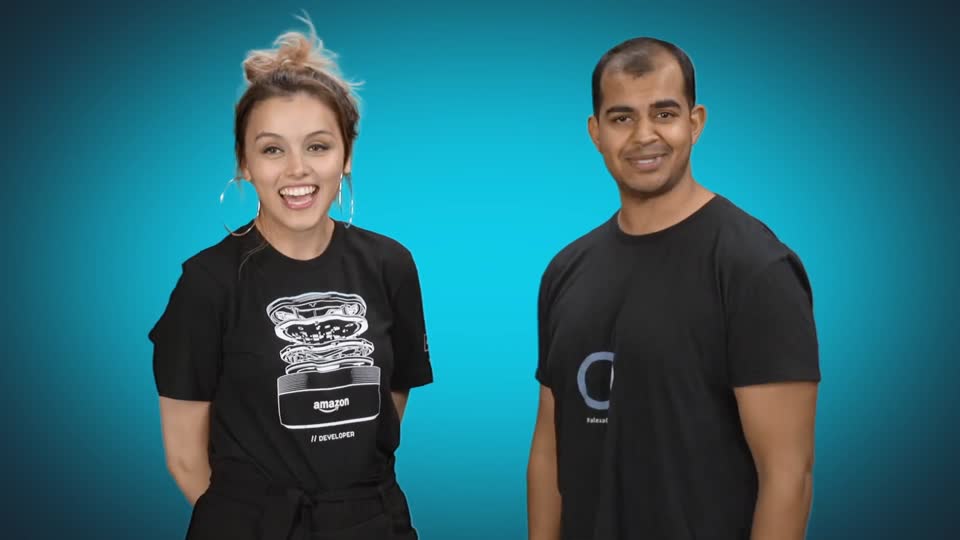
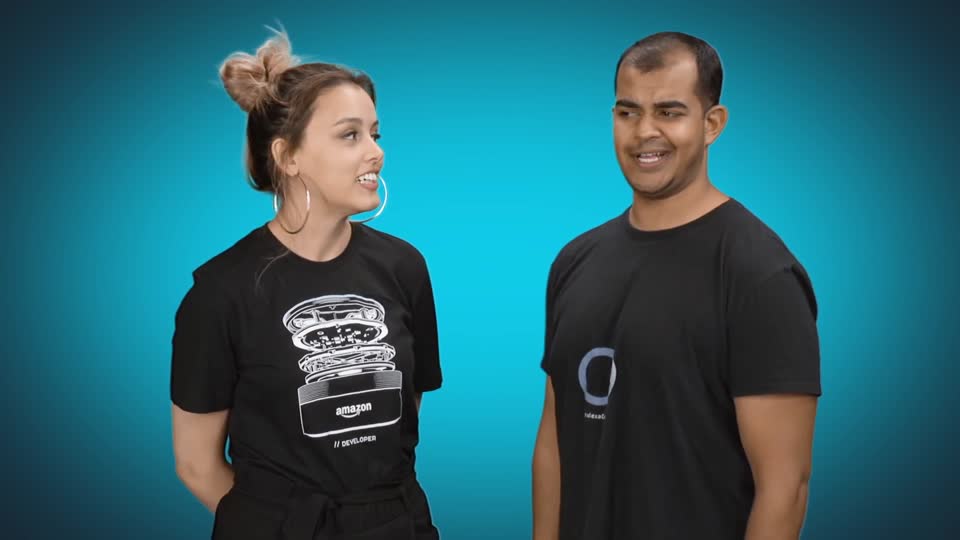
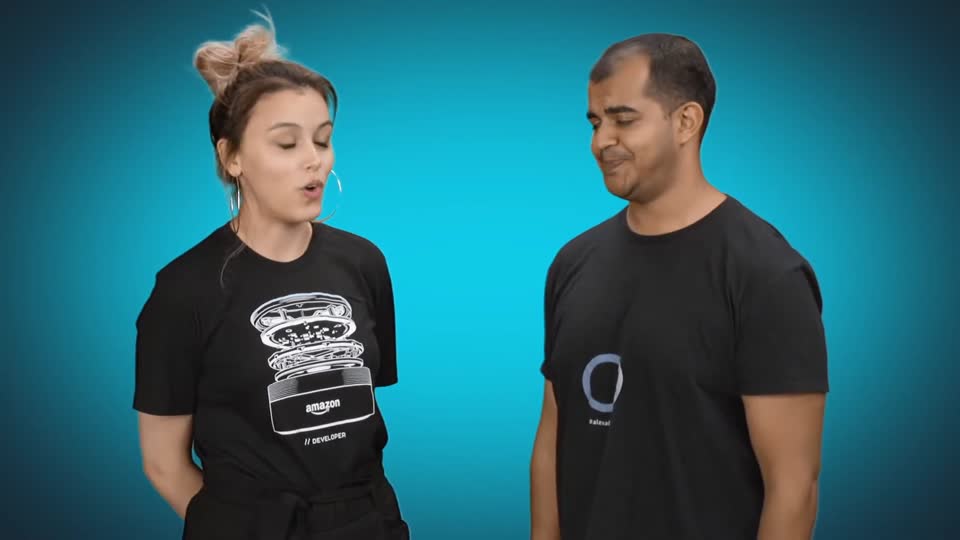
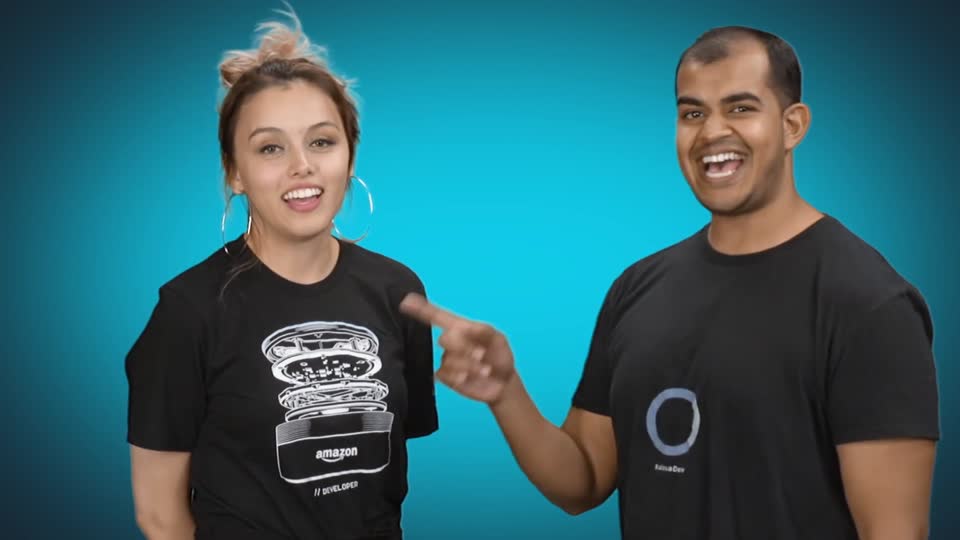
I pitched these short films because a conversation between two people makes a bad interaction painfully easy to recognise. I scripted them, organised filming and worked them into our developer learning materials.

Too much at once

Someone gives several useful details in one go. The other person struggles to take them in. A voice interface needs to handle more than one answer arriving at a time.

Try a better response

Acknowledge what you understood, keep those details, and ask only for anything still missing.

Original: Overfilling Fail

On screen: Cami Williams and Akersh Srivastava. Justin Jeffress helped behind the scenes. Amazon Alexa developer education, 2018.

The puppet has a moment

A small interruption to an otherwise very professional day. I’m under the desk, playing Sylvester.

“I went to college.
This is my job right now.”
Read the outtake

“Welcome back. I hope you guys had as much fun as we did making an Alexa skill.”

“I went to college. This is my job right now. What a strange and twisted turn of events.”

“Sylvester.”

“Yes. Sorry, I just had a moment of clarity.”

“It’s bizarre. I don’t know how I ended up here. I mean, it’s kind of cool, but it’s a little bit weird.”

Made by people

The course

Build an Alexa Skill with a Skill Blueprint!, AWS Educate Hour of Code, 2018. I wrote and led the project, built the course in Articulate Rise, and performed Sylvester. Cami Williams and Akersh Srivastava starred and consulted on the content.

Archived course · Skill Blueprints

The conversation films

Amazon Alexa developer education, 2018. I pitched and scripted the films, organised filming and integrated them into the learning materials. Cami and Akersh performed; Justin Jeffress helped behind the scenes.

Justin’s video portfolio · The wider learning project

This independent portfolio reconstruction was assembled in 2026. Original footage remains the work of Amazon and its contributors. The layout, explanations and story exercise here are new. This site is not an Amazon service.